Showing posts with label near. Show all posts

Tuesday, January 6, 2015

Space1 Test Spacecraft

SPACE1 TEST SPACE CRAFT

Space1 has a continually growing and powerful collection of proportional test spacecraft helping to move towards space tourism.

The space inventory includes 15 space tourism and test rockets and six flyable Space Places, designed to serve as outposts in space and space stations. Space tourism, flights through Micro Space, Next Space, Near Space and beyond are potential reality for the public in the near future.

The top photo shows the pressure chambers from a Micro Spacecraft test in which fuel is automatically beamed up to the spacecraft through the atmosphere. This allows for a lighter craft to be powered in flight without carrying onboard fuel.

The second photo shows a very small nano flying test platform, with a backdrop of an Apple iPhone 5. This four engine flight model is used for testing below 1000 feet of atmosphere. Such vehicles can launch from skyscrapers at thousands of feet elevation resulting in nearly a mile of vertical test flight.

SPACE1 CRAFT INVENTORY
15 - Safety Rockets
02 - Two-Engine Space Place
02 - Four-Engine Nano Space Place
01 - Four-Engine Mid-Size Space Place
01 - Six-Engine Large Space Place

Friday, January 10, 2014

Exploring Space

EXPLORING SPACE
The chart illustrates how the Big Brain Machine and Humanoido Laboratories conduct their own space program. Various levels of space are defined according to their exploration programs and space definitions.

Humanoid robots are adaptable to space
The Big Brain machine has a manned space program and has launched humans into Next and Near Space approximately 40 times.

There is always a risk associated with manned space flight and as the distance from Earth increases, so does the risk.

The robust Micro Space program is relatively safe and used for academic purposes, having launched insects and various instruments into space.

Solar panels can power a tiny outpost in space
Solar System Space and Ultra Space is currently safely explored with the array of very powerful telescopes and Monster Machines.

This includes the newest M3T, IT, ET and OT space omnipresence telescopes that are able to exist in multiple places at the same time.

For example, the large Big Brain supercomputer that controls these telescopes remains on Earth at the Deep Space Center and at the Ultra Space Administration while the space parts and components are at numerous locations in space, called Adjuncts.

Brain in a jar technology
Brain in a Jar technology could keep the space station operating autonomously and evolve to various applications.

Our space program is interested in developing a micro space shuttle and a micro outpost in space. This is an ongoing project that began decades ago.

We've periodically blogged these ideas and worked on evolving the designs. Many of the designs developed, i.e. space telescope, could be integrated into the program. This would take exploration into Solar System Space and create orbital flights. We are reaching the crossroads in space exploration and foresee a new technology breakthrough.

We are at the crossroads of space and time
Conjecturing, we wonder if the next step into space for man will be represented by the human being transformed into a space faring humanoid avatar.

Our solar system space program could be conducted with space stations, shuttles and other space equipment designed for humanoid robots which won't need to breathe air, eat bulky food, drink water, or create waste products as we know it. They will also have a greater range of thermal operations.

Thursday, January 9, 2014

Humanoido Manned Near Space Flights

HUMANOIDO MANNED NEAR SPACE FLIGHTS
This is a short list of 16 manned Humanoido space flights spanning 3 years including 2012, 2013, and the first month in 2014. Each date represents two launches. The list is incomplete, as not all near space flights were blogged.

Oct. 12th, 2012

http://humanoidolabs.blogspot.tw/2012/10/journey-into-next-space.html

Dec. 8th, 2012

http://humanoidolabs.blogspot.tw/2012/12/december-space-launch-2.html

http://humanoidolabs.blogspot.tw/2012/12/first-december-space-launch-one.html

Jan. 6th 2013

http://humanoidolabs.blogspot.tw/2013/01/big-brain-space-launch.html
 

Feb. 3rd, 2013 
http://humanoidolabs.blogspot.tw/2013/02/near-space-flight.html

May 2nd, 2013
http://humanoidolabs.blogspot.tw/2013/05/near-space-launch-morning-may-2.html


http://humanoidolabs.blogspot.tw/2013/05/near-space-launch-night-may-2.html

July 17th, 2013
http://humanoidolabs.blogspot.tw/2013/08/near-space-launch.html 


http://humanoidolabs.blogspot.tw/2013/07/over-rainbow-space-flight.html

Oct. 12, 2013
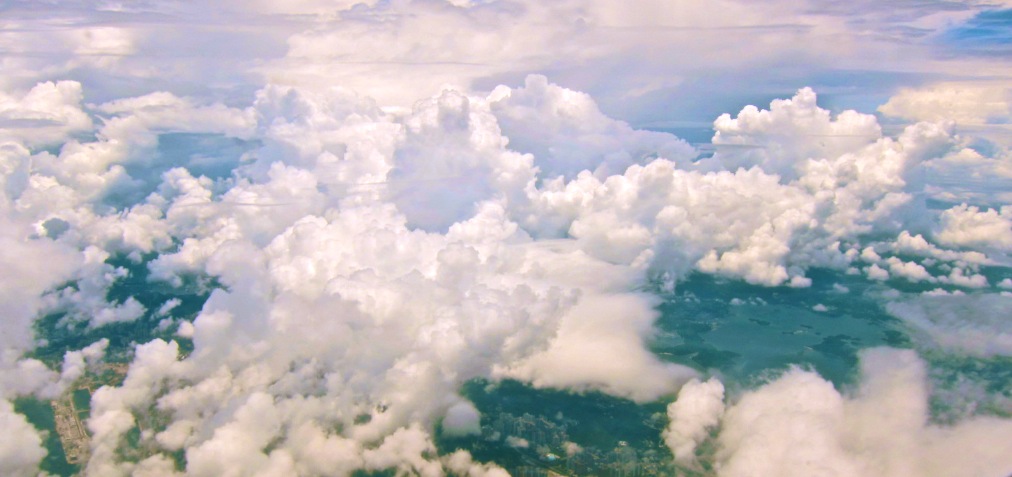
http://humanoidolabs.blogspot.tw/2013/10/near.html


Jan. 14, 2014
http://humanoidolabs.blogspot.tw/2014/01/blast-off-into-space.html


OTHER SPACE LAUNCH RELATED LINKS
The Prime Directive
http://humanoidolabs.blogspot.tw/search?q=prime+directive

Previous Documented Launches
http://humanoidolabs.blogspot.tw/2012/10/journey-into-next-space.html

Types of Space
http://humanoidolabs.blogspot.tw/2012/10/types-of-space.html

Next Human Launch into Near Space
http://humanoidolabs.blogspot.tw/2013/04/next-human-launch-into-near-space.html

Near Space Test April 2013
http://humanoidolabs.blogspot.tw/2013/04/near-space-test.html

Space Launch Slated for Thursday
http://humanoidolabs.blogspot.tw/2013/04/space-launch-slated-for-thursday.html

Cloud Identification During Near Space Flights
http://humanoidolabs.blogspot.tw/2013/08/cloud-identification-during-near-space.html

Micro Strata Threads Discovery from Near Space

http://humanoidolabs.blogspot.tw/2013/08/micro-strata-discovery-in-near-space.html

ULTRA Space Administration

http://humanoidolabs.blogspot.tw/2012/03/ultra-administration.html

Rocket Men

ROCKET MEN
Rocket men are the driving factor to private industry beginning to break the surly bonds of Earth and move upward into the boundless realm of space.

A number of space projects, both current and past, have paved a stairway to the Heavens. Many of these projects are now run by private companies and individuals, some of which use their own funding. The rockets are smaller and the payloads they carry are smaller, sometimes they have only one man capacity. Source

Though the original project was canceled, Hermes offered up designs for a compact and more diminuative space shuttle. Today, Space Transport and Recovery Systems, LLC, or STAR Systems, is a startup aerospace venture dedicated to providing affordable access to space. We're comprised of a multidisciplinary team of engineers, scientists, students and other professional talents. Together, we're developing the Hermes, a suborbital spacecraft. We want you to have the experience of a lifetime, without using up your life savings. It's time to make your dream of going into space a reality. Link  http://www.hermesspace.com/


Balloon imaging satellite by Jim Newell went up 300 feet using common materials. The project snapped aerial photos from 300' up by suspending a hacked camera from 3 helium filled balloons.
http://makezine.com/projects/balloon-imaging-satellite/

Copenhagen Suborbitals is creating a rocket to launch a man in a suborbital flight. "Copenhagen Suborbitals is a suborbital space endeavor, based entirely on private donaters, sponsors and part time specialists. Our mission is to launch human beings into space on privately build rockets and spacecrafts. The project is both open source and non-profit in order to inspire as many people as possible, and to envolve relevant partners and their expertise. We aim to show the world that human space flight can be different from the usual expensive and government controlled project. We are working fulltime to develop a series of suborbital space vehicles - designed to pave the way for manned space flight on a micro size spacecraft." http://www.copenhagensuborbitals.com/mission.php

Thursday Jan. 10th, 2014  Orbital Sciences Corp: Solar array deployment is complete for Orbital Sciences Corp.'s Cygnus spacecraft, now traveling 17,500 mph in Earth's orbit to rendezvous with the International Space Station on Sunday, Jan. 12, for the Orbital-1 cargo resupply mission.

As part of the Ultra Space Administration, Humanoido launches into space, using the leased A1-B and other budget spacecraft. These suborbital space missions are currently human-based and skirt into near space. Missions, many of which have appeared on the pages of this blog, include a study of atmospheric pollution, deploying a night time mini space telescope, cartography, cloud study from the top down, and studying numerous fringe atmospheric and space phenomena.

http://humanoidolabs.blogspot.tw/2014/01/blast-off-into-space.html

Saturday, January 4, 2014

Blast Off Into Space

Floating in Near Space, the spacecraft appeared in the foreground in this view photographed when looking back at planet Earth. The fight and mission is a Big Brain Machine space exploration initiative funded by the Big Brain program and the Humanoido Lab Foundation and investors. The spacecraft is leased from Mainland China and successfully launches one American into space and makes a safe retrieval during the mission.
BIG BRAIN MACHINE'S SPACE PROGRAM
BLAST OFF INTO SPACE
Saturday January 4th, 2014

With the first Manned Mission in January of 2014, the Big Brain's robust space program launched a morning craft into Near Space. The launch and flight were successful and the entire mission went relatively smooth without a hitch.

The swinging camera in space sadly recorded vast death dominions of poisonous upper atmosphere clouds and a blanket of gray matter atmospheric pollution, with life threatening smog, extending as far as the space eye could see over the Asian continent, attributed to fierce industrial manufacturing, the release of deadly chemicals, burning of garbage and horrific release of dangerous gas and particulate matter.
Enhanced photo - Earth pollution gradient level studies
Studies included a photographic mission, atmospheric phenomena, the transit of Earth horizon atmospheric gradients, content and water vapor relative to altitude, early low level cloud formation, and numerous other studies.

The Earth cartography mission was abandoned due to ground level pollution and smog being at an all time high level. This changed the mission to one of a deadly smog and pollution study.
Large machine aerospace hydrodynamic pump

The spacecraft reached about 7 miles altitude with a downrange speed of 486 mph. Temps reached -46 deg. F. in space when the downrange distance of 185 miles was exceeded.
A RESTRICTED AREA  Area 27 is like a vacated ghost town with no residents or apparent occupancy. It has this large unknown structure for dealing with spacecraft launching. No information is available regarding its purpose. Other than a launch deliver hatch housing, most objects are simply unidentifiable. Photo was shot through several reflective windows causing some reflections of various posted signs.

One known glitch is the lack of space craft air regulation and most of the flight was excessive in heat causing the astronaut undue discomfort. This is a common anomaly in Chinese origin or modified craft. This is also due to pressure of the spacecraft and the lack of thermally environmentally controlled individual space suits to keep the missions on a minimal budget. At this time, budget missions do not include space walks.

The higher the altitude, rising above pollution, the darker space became. At this altitude, the Earth itself is still too bright with a lot of reflected sunlight causing the inability to see objects in the galaxy or solar system. This is because the flights are suborbital in daylight for various reasons. No stars or planets were seen.

As usual in these space missions, some equipment is photographed for the mission. This is presumably the pump for highly refined and maximum rocket fuel delivery to fill the tanks on the craft.

Area 27 is off limits and has presumably a very large tracking station on top of the spacecraft center regional housing structure as seen through this reflective window shot. Though we cannot be sure of its purpose, it could also serve as a massive device to vent strange materials or toxic production gases.

The roof is geometrically sinusoidal in shape and houses the giant duct appearing device within the low negative slope of the roof. Several man sized objects are visible however it's strange that no people are in this vicinity.

Sunday, October 13, 2013

Near Space Flight in October

Miles and miles above the Earth in Near Space, the atmosphere seen off in the distance appears to shrink to a small perimeter band. High altitude lenticular parallel cloud belts are seen across the planet. The Near Space Program is a robust part of the Big Brain Machine initiative to continue exploring multi levels of space from Micro Space all the way out to the edge of the Universe and beyond. The grand exploration now includes both robotic and manned space flights, and a special class of exploration with new powerful telescopes and instruments in space.
NEAR SPACE FLIGHT IN OCTOBER 2013
MANNED SPACE FLIGHT Launching the spacecraft near the East Sea of China with a trajectory down range above the Taiwan Straits and passing directly above the islands of Penghu, October's Near Space launch was spectacular and went without a hitch.

White line shows path

Spacecraft preparations prior to launch vector include hatch calibrations by the spacecraft technician using the adjustable height mobile transport console and instrumentation control panel. The large pressurized space vehicle is owned, operated and maintained by Mainland China and leased to private enterprise.
 The Penghu islands are an archipelago off the western coast of Taiwan in the Taiwan Strait consisting of 90 small islands and islets covering an area of 141 square kilometers.

The whole archipelago forms Penghu County, Taiwan Province, Republic of China. The Penghu islands consists of near one hundred islands. The land area totals about 127 square kilometers. The Makung Island (including Makung City and Hushi) is the largest island in the archipelago, followed by Hsiyu, Baisha.


Parallel cloud banding

LEFT: Parallel bands of clouds arranged across the planet, as determined by seasonal prevailing trade winds in this vertical rotated view for clarity.

Outside the heated spacecraft during the passage, temperatures reached -42 degrees Centigrade at an altitude of 10,647 meters. Downrange ground speed was a blistering 876 km/hour.

Aeronautical Tawian and Penghu Islands map for downrange flight path study
Downrange map Penghu Islands
The alignment of numerous lenticular parallel cloud bands was studied and high altitude imagery was obtained. A total of thirteen digital color images were obtained showing the Earth and the backdrop of deep space. The delineation boundary of space relative Earth's atmosphere is particularly striking.

LEFT: This is the first time the downrange flight path traversed above the Penghu Islands archipelago.

The Big Brain machine is continuing to provide assessments regarding the exploration of Near Space. The NS program is currently maintained at two launches every three months. This is budget down from the previous rate of 12 launches every six months and prior, a launch field of 24 lift offs per year.

The more lean 2013 budget allows the pursuit of numerous additional related Big Brain projects including the development of a new spacecraft robotic intelligent life form probe designed to travel to the outer fringes of the Solar System and autonomously explore new worlds with the ability to discover and communicate with new life forms.

Other active projects include a new larger computational Half Gallon Brain in a Jar, robotics devices for the Brain inclusive of little feet and a full size hand, and the new equipped "interplanetary" Mission Control Center capable of receiving wireless transmissions, images and data.

The Big Brain continues to operate and maintain the DSC Deep Space Center and the USA Ultra Space Administration, products of the Big Brain Supercomputing Center.

Wednesday, August 7, 2013

Altitude from Cloud Type

The rising Near Space craft captures a spectacular variety of clouds at many altitudes (looking out of the cockpit window, down obliquely). This rare photo appears to show every type of cloud, including fog, rain, contrails, and other types along with their variations!
DETERMINE ALTITUDE FROM CLOUD TYPE
The technique of determining altitude based on the type of cloud is only a general rule and can vary based on the location, season, local variants such as pressure, temperature and humidity, and extent of the cloud.

Based on studies and information gathered from the Big Brain's Near Space Program and data sources, the following information about cloud altitude based on the cloud type is determined. Note that some clouds exist in more than one strata level.

Generally the altitude method with clouds involves knowing your Earth position, details gained from observing the type of cloud, identifying the cloud's structure (it could exist in one strata or several stratas), and looking up the cloud on the altitude guide provided below. We will use three groups of low, medium and high altitudes. This is based on the temperate zone of the Earth. If basing on the tropics, high is 5-14 km, medium is 2-7 km, and low is 0-2 km.

LOW ALTITUDE CLOUDS
0-2KM TEMPERATE ZONE
0-2KM TROPICS ZONE
Stratus, Stratocumulus, Cumulus*, Towering Cumulus**, Cumulonimbus*, Towering Cumulonimbus**, Nimbostratus*, Fog
*   Can extend into medium level
** Can extend high level

MEDIUM ALTITUDE CLOUDS
2-4 KM TEMPERATE ZONE
2-7 KM TROPICS ZONE
Altostratus, Altocumulus, Nimbostratus*
* Can exist in low level

HIGH ALTITUDE CLOUDS
3-8 KM TEMPERATE ZONE
5-14 KM TROPICS ZONE
Cirrus, Cirrocumulus, Cirrostratus, Towering Cumulus*, Towering Cumulonimbus*, Contrails
* Can exist in low level

RAIN CLOUD TIPS
If it rained recently or is about to rain, you are most likely dealing with a low level stratus cloud. While it is possible for rain to fall from mid-level clouds, it is quite rare. If it is raining during your observation, you have nimbostratus (or cumulonimbus - but the difference should be obvious! The latter is a thunderstorm).  The terms nimbo/nimbus are from a Latin word for rain. 

LOW LEVEL TIPS

If a Stratus cloud is so thick you can't even figure out where the sun is, most likely it is a low level stratus. The visual opacity of such a cloud is opaque.

MEDIUM LEVEL TIPS

If you can see the sun but it looks diffused (like looking through a glass bottle), most likely you have Altostratus. The visual opacity would be translucent.

HIGH LEVEL TIPS
High-level Cirrostratus will generally be thin enough that the sun is still quite distinct. If the Cirrostratus is not between you and the sun, you may be able to distinguish Cirrostratus as being so thin that parts of the cloud appear bluish (that is, you are seeing through to blue sky). The visual opacity is transparent.


LINKS
Cloud Type Determinations
http://wvscience.org/clouds/Cloud_Key.pdf

Tuesday, August 6, 2013

Cloud Identification During Near Space Flights

Click cloud chart for a larger view
CLOUD IDENTIFICATION DURING NEAR SPACE FLIGHT

Do you think identifying clouds during manned Near Space flights will be a little different from Earth-based identifications? From the previous Near Space flights in July of 2013, seventy four cloud images are selected.

Use the handy miles to kilometers at-a-glace chart for simple and quick conversions.

Let's take a look at the chart of different cloud styles seen from Earth (shown above) and a sample of 74 clouds seen from the Near Space spacecraft (shown below).

The trip into Near Space resulted in images of every cloud type, including rain, fog, and contrails. These images show only a small selection of the many clouds recording during flight.
Do clouds, as seen on Earth from the horizon vantage point, look a lot different from clouds top down or obliquely viewed during a Near Space mission? Let's run this experiment to find out. The data is based on two NS space flights on Wednesday, July 17th, 2013, with the data for two sets of ascend and descend.

The unique aspect about a Near Space flight is looking at clouds from the top down position. Clouds can also be viewed down obliquely. During lift off and reentry, the craft passes near and through the clouds for more studies of clouds.


The rows of these images are numbered from left to right.
Our Near Space flight program extends from zero to 7 miles, which is zero to just over 11 kilometers. The chart shows cloud types that exist up to nine kilometers. Thus, the Near Space flight has the potential to observe all cloud types from the top down.

Data shows that more than nine out of ten times, the craft is above all clouds at the apex of flight. We will select a cross section of photos taken during ascent and descent, where the craft can look down on clouds or out across the cloud population from the "above vantage position." Selections were made with the TST Tiny Space Telescope pointing down or obliquely.

Micro Strata Threads Discovery from Near Space

The TST Tiny Space Telescope in short EFL mode was looking downward when it captured many micro strata mixed with many banks of clouds
MANY MICRO STRATA THREADS DISCOVERED FROM NEAR SPACE
Once you rise above the majority of the clouds when exploring Near Space, you can look down and out across the majestic expanse of near Earthen clouds and see many spectacular wonders.

At least 16 micro strata are visible and counted
Telescopes are usually pointing upward towards the Heavens, capturing celestial wonders. We've taken our telescope and pointed it downward, from Near Space.

Imaging downward with a Tiny Near Space
Many rainbows, 1=circular
Telescope, you might see many rainbows beginning with a completely circular one or many micro stratas. The latter was the view captured during our manned Near Space flight on Wednesday, July 17th, 2013.

This photo shows simultaneously, at least sixteen thin pencil line dark stratas, all running parallel to the horizon. Study shows these are likely caused by the increasing frequency of contrails, due to juxtaposition relative to a ground based airport - where jets spewing fuel exhaust in their flight patterns across the wispy cloud world. However, we cannot be certain, as this could show a mysterious outcropping of a natural phenomenon.

LINKS
Rainbow from Near Space
http://humanoidolabs.blogspot.tw/2013/07/over-rainbow-space-flight.html

Friday, August 2, 2013

Near Space Launch in July

Remarkable cloud view during space flight reentry

THE CONTINUING SAGA OF ONE MAN'S EXPLORATION OF SPACE
THE BIG BRAIN INITIATIVE - NEAR SPACE PROGRAM
NEAR SPACE LAUNCH JULY 17TH, 2013
History: Micro Space rocket launch
Early Big Brain
History: Next Space view
Powerful telescopes probe Deep Space
The electric Big Brain processor machine was literally born from Parallax Propeller chips and began assimilating other machines until it gained a semi cognizance and began a directive to explore space. At first, it built rockets and launched tiny insects inside the world of Micro Space, going up 7 to 12 feet inside a room. Then it explored Next Space
by putting humans up 2,000 to 3,000 feet using country mega projects. The next step was Near Space exploration, launching a human upwards towards the ten mile mark. All during this time, the watchful eye of the Big Brain has become ever more powerful, with the construction of increasingly more and more powerful telescopes and machines probing Deep Space in a cosmic quest to conquer the Universe and beyond.

Spectacular view from Near Space at 10,000 feet as seen through the buffeted and reflective cockpit window

Things were very busy in July with two daytime manned spacecraft launches into Near space on the same day. The first on lifted off on the morning of July 17th, 2013. The flight lifted up over the Sea of China, passed downrange over China, Hong Kong, and Taiwan, as it made several discoveries about space, weather, rainbows, and in flight operations. The TST Tiny Space Telescope was deployed to get shots of the atmosphere, space objects and the Earth. Be sure to review the previous post about a rainbow, as the craft rose above and over the majestic site. (link below)


INTRODUCTION
The Near Space flight was a great success with discoveries and surprises. During the flight, the Tiny Space Telescope was deployed to obtain all daytime shots and record very interesting space phenomenon. It's targets were celestial objects, various locations on the earth and highly unusual weather nodes.
Tiny Space Telescope captures Sun and objects
DATA FROM THE TINY SPACE TELESCOPE
The TST was always viewed as a night time telescope for study of star fields and celestial objects in the night sky. Now the TST is being deployed for other uses. Earth reconnaissance is one use and this flight captured various views of ocean islands and land masses for mapping and surveillance. Daytime celestial observing is also possible, even there is motion due to the spacecraft. The Tiny Space Telescope TST captured a view of the sun seen with other objects during the daytime. The image is corrected for two main window cockpit defects that occurred during flight.

Man made islands seen during reentry
EARTH TARGETS
The above target photo shows a series of islands, in particular, these man-made islands that are built up extensions, like anchored and rooted platforms that go out into to sea to reclaim and establish more land for refineries and other activities. These Asian land locations have shortages of land due to great masses of population and large cities that have populated available space.

Near Space flight support machine
Engine refueling flight operations machine
FLIGHT APPROVAL
The flight's air space and equipment were sanctioned and approved by Mainland China, Hong Kong, Taiwan and other space agencies.

SPACE FLIGHT COSTS AND BUDGET
The cost invested for this manned flight and the related equipment and rental of the crafts multi turbo engines came to about $1,000.00. With rising costs of spacecraft engine refined liquid fuel, and to compensate and commensurate the Big Brain's budget for its space exploration initiative in the upcoming year, the number of manned flights are now reduced from twelve per year to eight per year.

SPACE FLIGHT OPERATIONS SUPPORT MACHINES
Two photos show the site support machines. Some machines have large reels with hoses to supply and pressure pump liquid propellant fuel. Others with pressure tanks, valves and pipes seem to have an unidentified purpose.

Second location remote space launch facility has numerous windmills generating electrical power. In the forefront, a radio weather radar observatory has a dome to house a rotating dish antenna.
THE SPACE COMPLEX
The space complex view shows a radio telescope facilities housed inside a dome that contains a rapidly moving radar dish antenna to give instantaneous weather data for "near space" flight operations. This is remotely linked to space command center. Launches can take place in somewhat adverse weather, like rain, but not high winds or conditions related to a typhoon. In the previous space flight, the launch took place during a rain storm. It was only a matter of minutes later and the spacecraft had risen above the weather reaching clear skies. 

ELECTRICITY FROM WIND
Six electric windmill generators pepper the background as these use wind to turn turbine generators that generate electrical power. It's important to note, there are more than one space complex utilized in this space program. The lift off location is not necessarily the same as the landing location. A landing location can also serve as a lift off location and visa versa. The facilities are also powered by the wind.

Slight Earth curvature begins above seven miles
EARTH CURVATURE
One thing enjoyed by manned Near Space launches is the fascination with seeing the barely visible detection of the Earth's curvature, but this is more readily seen above the seven mile mark.

WEIGHTLESSNESS & SPACECRAFT DESIGN
No weightlessness is noticed at these Near Space altitudes. Outside the craft, temperatures can become colder than -70 deg. F. and the air is too thin to breathe. Therefore, the spacecraft is both heated and pressurized, and thus no space suit is required.

VIEWPORT
The majority of the work takes place behind a multiple layered safety glass viewing port. From time to time, condensation can form in between the layers and particles can attract to the surfaces due excess ionic charge collection. This flight was free of condensation, as this happens most during winter months. Of course ions can collect at any time causing particle attraction. The effect of window scratches is still noticeable at times with a particular solar lighting, though there is not much we can do about it. It's unknown when the windows will be replaced in the used spacecraft.

High altitude cloud banding above the ocean
HIGH ALTITUDE CLOUD BANDING
One effect seen on numerous space flights is high altitude cloud banding above the ocean. A good photo of the effect was captured during this flight out above the ocean across the Sea of China, climbing above the five mile, then six mile altitude mark.

Head cloud phenomena rises above the strata gradient in this TST low FL image
CLOUD PHENOMENA
Three prominent cloud fronts had arisen out of the strata and were first imaged with the TST a the smallest focal length. The next image shows a 50% larger image scale and more detail on the three largest structures. The final image shows the largest TST image scale and the highest level of cloud detail.

A 50% increase in EFL shows more head clouds rising above the strata
Above: with a three image study, captured by the TST, the greatest EFL view shows a highly detailed cloud structure rising above the strata level. The TST has zoomed in on a particular formation.
RARE PHENOMENON COLLECTION
This flight included numerous rare images taken as the TST was never before deployed this way during take-off and landing. It was also the first time for imaging the cloud banding effect above the ocean, viewing rise-up strata cloud formations, recording a round rainbow from the top down, striking cloud filters, capturing the sun and the surrounding space field of objects, plus capturing Earth's man-made islands, performing island and land mass reconnaissance from Near Space, and gaining other spectacular views.

The advantages of a Near Space engine: powerful use of air turbines is viable
SPACECRAFT ENGINES
A Near Space Spacecraft can still operate using engine turbos that displace air, providing the altitude of the spacecraft does not exceed the 7 to 10 mile mark. At higher Near Space altitude flights, two spacecraft engines are required. Here we see statically see one of two massive engines. The crafts are powered by various engines, in particular a Rolls-Royce Trent 700 with 71,100 foot pounds of thrust (316 kN), a Pratt & Whitney PW4000 engine with increased turbo size to augment power at 70,000 lbf (311 kN), or a General Electric CF6-80E at 72,000 lbf (320kN). It can thrust upwards to an altitude around the 7-mile demarcation point at MACH .86.

SPACECRAFT
The spacecraft is 209 feet long with a range of 5,700 nautical miles and weighs around 240 tons. If you want to buy one, it costs about $222.5 million dollars. We suggest renting one at a thousand dollars per use. Space travel in this spacecraft is not 100% safe and the risk has led to 13 large scale failure occurrences with a total of 339 deaths over the years of operation. The craft also requires a large crew to maintain and keep it in operations. During flight, two people are required to navigate and fly the craft from the cockpit. It holds 25,760 US gallons of fuel per flight. That's equivalent to 2,576 cars with ten gallon fuel tanks.

At the juncture of ocean to land, with coddling mountains, striking parallel Sun rays are created from numerous cloud filters
STRIKING CLOUD FILTERS
Dramatic striking cloud filters are set up by the Sun and clouds that filter the sunlight to create parallel bands of striking sun rays.

TEMPERATURE
Also in reviewing in-flight data, a trend was noticed. During the summer months, temps are warmer at the same altitude compared to winter launches, in this case around -42 deg. F. instead of -71. 

LINKS
Over the Rainbow
http://humanoidolabs.blogspot.tw/2013/07/over-rainbow-space-flight.html