Showing posts with label tech. Show all posts

Friday, November 26, 2021

Big Space & Technologies Expo

Humanoido Organizes the Largest Big Brain Space Technologies Expo Ever Conceived
SPACE1 and Big Brain Technologies sponsored its largest space expo to date, made possible by Humanoido, Founder of both organizations.


This year's Expo was a 12 day event and included everything Big Brain and space from the perspective of private industry and owner Humanoido. 

Organized by Humanoido, the Expo was sectioned off and subdivided into a series of events. On display were many cutting edge technologies such as an actual new Dynamonic Electrodynamic Stargate Explorer Vehicle for space travel. Space ventures could be scheduled for excursions towards lunar orbit on the days of good weather. Virtual EXPO sections were provided due to Covid arrangements.

Divided into high technology sections, working demonstrations of starship cloaking device, long range sensors, the craft to travel throughout the solar system and lunar lasers could be accessed. The section of Dimensional Traversing was very popular which led to the Quantum door and Quantum Space Computing. Scientific paper academy covered three days. The AI section was popular and shown were AI robotics with world knowledge and the Big Brain Supercomputer with the first Bio chips integration.

— the massive door prize was a free trip into space worth 25 million dollars —

Humanoido demonstrated Cyborg Transhuman intelligence by staging demonstrations of advanced IQ and enhanced intelligence. Big Brain Technologies demonstrated silicon life forms and results from the Big Brain Supercomputer AI. Pacific Lunar Extravaganza Dynasty was present demonstrating its new Lunar Atlas for colonization of the Moon. SPACE1 provided historical records of astronaut Humanoido's first trip to the Moon's South Pole. High Tech Space Country was present signing up new country members for migration life beyond the Oceanic Pacific Rim.

Jobs were signed for conducting high technology space operations in the South Pacific Ocean. SPACE1 demonstrated eight years of Safety Rocket development and evolution. Another demo, an advanced version CORTEX BRAIN in a jar was demonstrated as a portion of a human brain was uploaded into the machine brain in the jar. The machine digital Cortex Brain could talk and recant stories and personality of the person who uploaded their consciousness. This new version of Cortex Brain was operated on fuel cells with solar cells and battery backup. The project demonstrated how future humanity may achieve life immortality.

Singularity Observatory was present demonstrating two of the world largest telescopes and the high technology methods of Amping. Also show was a device to see through clouds and inclimate weather. The achievements of Humanoido's space telescopes were also presented with free autographed rare copies of his book Power Telescopes which contained a full color spread of astronomical images taken throughout the Universe. Humanoido's space repair robot humanoid was on display along with numerous other rocket astronaut robots. A completely new method of conducting a SETI project to search for alien life with probable much higher success was illustrated.

Science & technologies inventions galore were present and the Cloaking Device was extremely popular. People lined up to make themselves and/or families disappear. Life Sentience was a theme at the demo room where plants exhibited communicative intelligent behavior and plant brains were accessed. Humanoido showed his interface that allows fish to talk and speak in English. He is working on a plant version prototype.
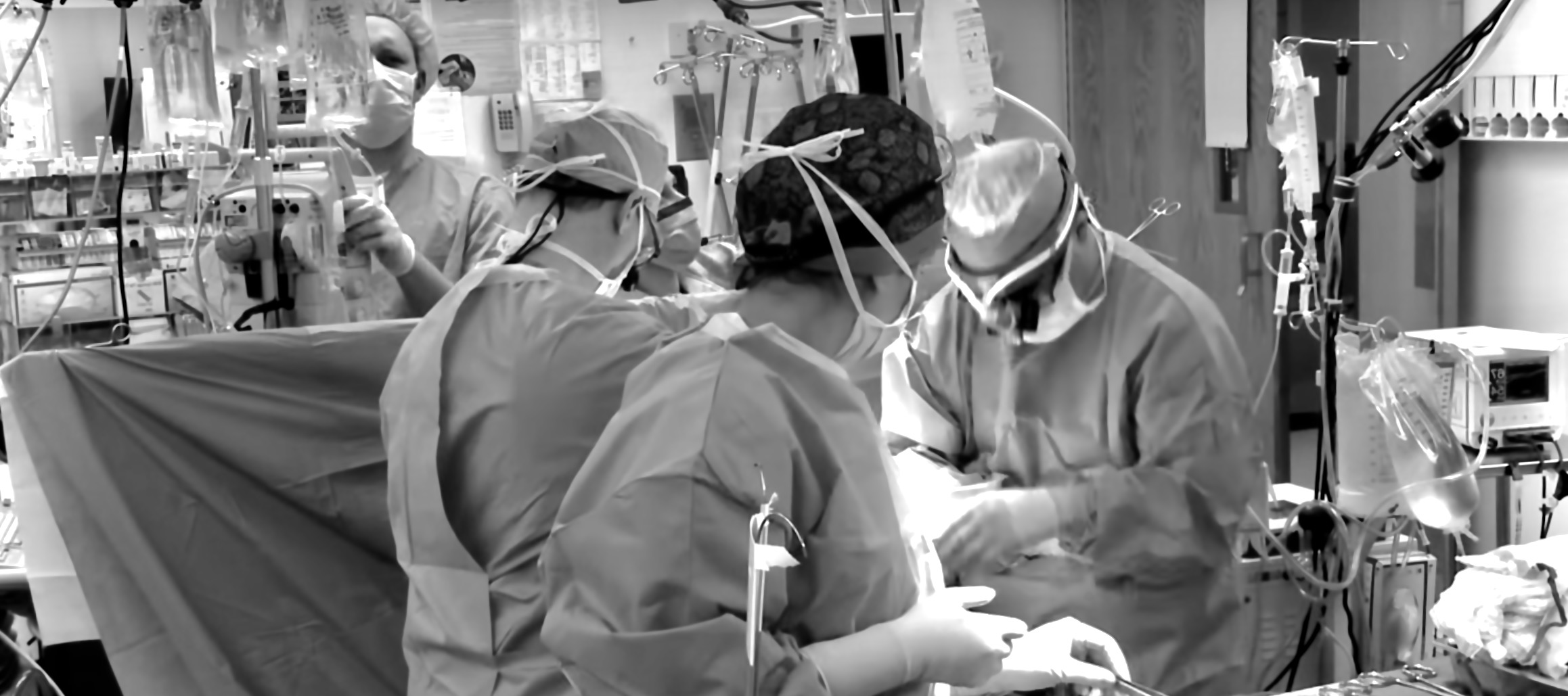
Big Brain Technologies Medical Lab was present showing the process of taking AI into human implants to raise the intelligence IQ level of humans and to access the human brain in ways that were not feasible previously. SPACE1 demonstrated its famous Imaging Space Telescope returned from space and a gallery of space objects. Complete rare sets of the magazine SPACE1 were available.

The paper presentation section included advanced reviews of what lies beyond Einstein's Space Time Continuum, conquering the realm of alternate dimensions, constructing DIY cloaking devices, building starships, piloting the new Dynamonic Electrodynamic Stargate Explorer Vehicle, tuning & calibrating Stargate in wide discovery & explore modes, Astrophysics and orbital dynamics, calculating orbits and the mathematics of solar system and stellar navigation, how to increase your IQ significantly, build a digital cortex brain and transfer your consciousness, communicating with fish and plants as sentient life forms, and others. The Expo ended with the drawing for a massive door prize - a free trip into space, worth 25 million dollars.

Friday, August 23, 2013

Build Tiny Stamp BOE

BUILD A TINY STAMP BS2 BOE
How to Build a Tiny BOE Board of Education

Article adapted from Penguin Tech Magazine PT1

Maybe smaller is better when it comes to tiny robots, little machines, and experimenting with projects on a budget. How about making a tiny BOE at a fraction of the cost of a full blown version? This project is ideal for hobbyists, students, schools and anyone on a budget, or project in the small space league.


BOE is the Board of Education, from Parallax Inc. It’s a development board on which to build many interesting basic stamp projects and it can be used over and over again, due to its convenient solderless breadboard and pin-out connectors. BOE is also the board driving the popular BOEBOT robot.

BOE’s uses are many, from controlling servos to offering convenient power regulation, a reset switch, and various well labeled connectors. BOE is the instrument by which you can get your projects running quickly and effectively. However, BOE is small but not tiny. It would be nice to have a tiny boe for robots smaller than BoeBot, such as Penguin Robot, and other projects with limited space requirements. This article examines a way to create a tiny BOE. This tiny BOE is portable and convenient, operating off the well known OEM Basic Stamp 2. Buy the kit (see links), collect the parts, and assemble the BOE. It's loads of fun!

Mainly, we connected an edge board connector and added a tiny solderless breadboard using double stick tape (the 3M kind to connect picture frames to the wall). Wiring is accomplished by leading wires from the edge connector to the breadboard. There are many applications for Tiny Boe. You can even make a Tiny BoeBot. It’s recommended to first make some standard connections for reset, and power.

LINKS
http://www.parallax.com/
Penguin Robot Society
BASIC Stamp 2 OEM Kit
Solderless Breadboard

Thursday, June 20, 2013

BSS BASIC Stamp Supercomputer

The BASIC Stamp "Super Computer" BSS
PART 1

The BASIC Stamp Supercomputer is now 5 years of age, since it was introduced to the community in 2008. Let's revisit this machine and see exactly what's happened recently.

This is the Lab's first large scale parallel designed super computing experimental workhorse and testbed that was used for testing and years of experimenting prior to the Big Brain. This new series of posts will detail how it was built, evolved, and what it can do in terms of demonstrations and paving the way for more super machines.

The BSS led to at least fifteen more super computers (see genealogy) and evolved from the use of multiple single-core BASIC Stamp modules into multiple eight-core Propeller chips. It has led to the current supercomputer with over 100,000 processors. The BSS paved the path, enabling parallel computing and making the Big Brain possible.

Resources

http://www.p-robot.com/
http://www.p-robot.com/index.php/basic-stamp-supercomputer.html
Download software (22 programs)
Self Adjusting Master Code (New!)
Read the article in Penguin Tech 4
View the Schematic (page 6)
Watch the movie

Parallax Source Basic Stamp Supercomputer

File Type: zip BSS 22.zip‎ (55.6 KB) Software Downloads

(NOTE: This is a demonstration of basic principles to take some characteristics of a supercomputer, in particular the notion of larger multiples of relatively simple processors communicating over a common bus, each doing a portion of a task in parallel)


Edition 4 of Penguin Tech Magazine featured the BSS Supercomputer

My Supercomputer! I got the idea to make a model supercomputer at the basic hobby level to demonstrate the concept. It's super fast compared to single BASIC stamp, but be forewarned, it only beats out the worlds fastest supercomputers in ten other categories!

* Smaller
* Lighter
* Portable
* Field Operable
* Runs on Batteries
* Has the Greatest Number of (I/O)
* Has the greatest Number of Sensors/Variety
* Lowest Power Consumption
* Lowest Unit Cost
* Easiest to Program


It's a simple hobby project for fun and experimentation, using 11 Parallax Basic Stamp microcontrollers. (It was later expanded to 12, then 22 stamps). These "computers" are connected together for hardware/software clustered parallel processing. It's a fantastic learning tool and can control 176 peripherals/sensors. One application is for the more rapid development of robotic sensors and software.

it.youtube.com/watch?v=huukEEwy-3E
Some tips on watching the youtube vid. Select "Watch in high quality." Turn off sound, let the vid load in first by leaving for a break. When you come back, it will be loaded, turn up the sound, and watch it. It will run smoothly.

This is the World's First talking Basic Stamp Hobby Supercomputer!!! (and the World's 1st Supercomputer built from hobby microcontrollers) It communicates by English and Chinese voice (EMIC TTS board), lights (21 LEDs), vision, sound (12 speakers), motion (PIR), ports (176), infrared, Vibra Tab Mass detector, accelerometer, temperature chip, ultrasonics [PING)))], LCD Liquid Crystal Display, and a tiny uOLED color monitor. Attachments include a keyboard, 3D space mouse, and other goodies under development.


Final Rack Wiring Phase and Grounding Field Experiment

There's 22 switches, 11 are toggle and 11 are pushbutton. Fully loaded, it's only a few pounds weight, so it's very portable. The only concern is one wire popping off, as the breadboards, as handy as they are for rapid proto, are less than permanent. I prefer to keep it this way as the entire supercomputer can be disassembled for moving and for international travel.

It uses a one wire interface and has unlimited computer expansion. Additional stamps connect to the interface by routing only P0, Vdd, and Vss. It can be operated on batteries or a power supply. The basic boards only draw 18 to 30ma each. Even with attachments, such as the EMIC text to speech board (peaks at 157ma while talking) and the uOLED color monitor (peaks at 52ma), the current draw of all boards average around 340 ma. Computer 9 starts talking and the hive peaks at 360 ma.


All boards and sensors are shown working, drawing 311 ma at 9-volts DC. Eleven programs are running in parallel, controlling multiple sensors at the same time.

It runs well on batteries. I have used 11 zinc carbon batteries which cost about 29 cents each. It may be advisable to use alkaline batteries for the uOLED and EMIC as these draw more current. The uOLED can be programmed to consume less current, based on the colors it displays.

Individual Basic Stamps are able to switch on and off, for various special configurations. For example, a quick test of a sensor on one computer is possible just by toggling a switch and running software. Board combinations can also be run, for example, in combining sensors from computers #2, 5, 6, 8, 10 and 11.

Software sets up a Master Computer MC that's in charge of the remaining workers. The Master, or Boss, decides how to handle business, when to talk, who should talk, how to talk, and what to talk. In summary, it queries the Workers to gain data and information, which can be computational related or sensor related. With the 11-Stamp configuration, there are 10 worker programs and 1 Master program running in parallel. The hardware parallel computer cluster runs in parallel also. This can achieve some incredible power, especially when considering the availability of 176 ports, many of which can contain sensors and circuits.


Earlier wiring stage, showing use of clips to hold
boards and wiring


The youtube video shows all 11 computers communicating. You will see the Master send out individual "wake-up" calls to the computers it wishes to speak to. For example, to wake up computer 8, it sends out "c8." Computer 8 will respond by saying, "I'm computer eight." It lets the Master know when it has finished data transfer by sending its signature, a c8. All computers can simultaneously perform calculations and take sensor readings, however, they must report their data to the Master one at a time.

A nice feature is the LCD that monitors traffic on the supernet. The LED Traffic Monitor is connected to the supernet without any computer requirement. It runs by itself, although its formatting is best controlled by Stamp PBASIC. It's quite fascinating to sit back and watch these computers talk back and forth to each other.

Supercomputer Self Diagnostics SSD are also built into the software. At startup, the LED array bus bar lights a single LED data light for each of the working computers, and a piezo speaker provides check data from an alternate pin. This routine works well for immediately knowing which computer is available and ready. Troubleshooting, for debugging software purposes, is a gold mine. There's access up to 21 LED data lights, LCD text and numerical output, Piezo sound pin data, and uOLED monitor output for text streaming and numerical data logging output information.


Three bus lines - Data LEDs, Toggle
Switches, and Power Control are made
from clothes hangers machined with a
hobby tool.


There are 10 workers and one master. The master handles the parallel network traffic and polls workers for information. I originally planned 10 BS2 computers. Curiosity got the best of me when I wondered if other stamps could easily interface. The answer found was yes, when the 11th computer, a BS2px on a BOE, was connected. Most of the remaining computers are Basic Stamp HomeWork boards. I now have computer number 12, a BS2sx that I'm working with.

Why Build a Supercomputer? Here's some reasons:

• Learning experiences & challenges
• Expanding education & knowledge
• Gaining useful background for career
• Research Benefits
• Extending Basic Stamp power
• Creating new inventions, ideas, applications
• Own your own, prestige
• School project, credit
• Involvement, sense of great accomplishment
• Psychological relaxation, Symbolic Value
• Sharing, making new friends
 

A lengthy writeup appears, with plans, more photos, schematics, build instructions, and software, in Penguin Tech Magazine.

The BSS has led to many other styles and types of Basic Stamp Supercomputers, each with a specific purpose. It also led to many supercomputer Propeller platforms.
BASIC Stamp Supercomputer
http://forums.parallax.com/showthread.php?p=765140
1st hobby supercomputer using BASIC Stamps. Popularized putting together many processors to make a more powerful machine. Improved and upgraded to contain over 20 stamps.

Stamp SEED Supercomputer
http://forums.parallax.com/showthread.php?p=817126
World’s 1st living stamp supercomputer. Ten Stamp processors - each is a life form. They are born, develop a unique personality, talk to neighbors, remember conversation, recall information, do work, nap, sleep, and dream. Includes wireless transceiver.

TriCore Stamp Supercomputer
http://forums.parallax.com/showthread.php?p=822511
For testing and developing other supercomputers. Three Stamp processors = minimum requirement to test/ develop the Stamp SEED Supercomputer. Rapidly load/test multiple processor code. Includes lite version of life form code from Stamp SEED Supercomputer.

Minuscule Stamp Supercomputer
http://forums.parallax.com/showthread.php?p=821451
Smallest possible supercomputer, lowest cost, increases power of one processor. Contains two processors. Used for testing/writing code related to connecting Stamps together, establishing baud rates, timing/syntax, and exploring various network configurations.

Tiny Stamp Supercomputer
Not released. The world's 1st first hand-held BASIC Stamp supercomputer. Absolutely most powerful, considering it has the smallest footprint with many tiny networked processors. Has its own book with 30 fun projects. Includes Architecture, Assembly, Programming, Tutorial, Applications, Complete Code. The TSS has multiple computers, LCD monitor, radio transmitter, receiver, speakers, breadboard real estate and a 64K EEPROM memory board, interfaced to a tiny Hub. The TSS Stamp supercomputer is so small, it will fit into a soup bowl or coat pocket. Includes special features such as hardware programming "on the fly."

Two-Stamp BASIC Stamp Supercomputer
http://forums.parallax.com/showthread.php?p=765140
The wiring for connecting a BS2sx to a BS2px BASIC Stamp processor - how to amplify the power of one Stamp. This is entirely different from the Minuscule Stamp Supercomputer which uses different BASIC Stamp processors.

Handbook of Basic Stamp Supercomputing
http://forums.parallax.com/showthread.php?p=841541
This book is written to answer many questions about hobby BASIC Stamp Supercomputers and offer a starting point for construction of your own Stamp Supercomputer. Includes apps and programming and many details to get you started immediately. Delves into Stamp Artificial Intelligence and many aspects of Stamp super computing. Electronic version is posted and available for download free of charge.

Penguin with 12 Brains (aka Penguin on Supercomputer)
http://forums.parallax.com/showthread.php?p=765509
World's smartest Parallax Penguin Robot. In this project, Penguin's brain was connected to the BASIC Stamp Supercomputer. This created the potential to write 16,000 instructions, added all the resources of the Basic Stamp Supercomputer, 176 controlling ports, color uOLED display, green screen LCD, ultrasonic vision, presence sensors, memory, speech in English and Chinese.

Master Offloader Machine (MOM)
http://forums.parallax.com/showthread.php?p=765140
The Master Offloader Machine was conceived from the need to offload intensive duties of the Master Computer in the BASIC Stamp Supercomputer (BSS). MOM was the first supercomputing project to show that connecting together multiple BASIC Stamp 1s and Stamp 2 flavors was possible. Contained ten processors.

3DSC (4 Dimensional Morphing Computer)
http://forums.parallax.com/showthread.php?p=799604
World’s first 3D Stamp Computer to explore a multi-dimensional universe. Initially designed for simple space-time simulations. Includes three networked BASIC Stamp 1’s using Dx boards. Upgraded to include two servo-driven moving cores. Many applications developed for advanced hobbyists, students, teachers, designed for classrooms, high school Physics and advanced university level experiments with sound, light, time, motion, heat, etc. Upgraded with a Stamp 2 coprocessor.


http://www.p-robot.com/
http://forums.parallax.com/forums/default.aspx?f=10
http://it.youtube.com/watch?v=huukEEwy-3E

Friday, January 25, 2013

Paper Plastic or Polyester?

Photo 1
PAPER PLASTIC OR POLYESTER?
New High Tech Bag Holds Your Goods

Walk into Family Mart and you may walk out with the latest high tech or low tech bag, depending on how you look at it.

Photo 2
As seen by the texture in the photo, the bag is a type of fabric polyester, which is not the only differentiating feature from conventional bags.

Photo 3
This one appears to have a series of oval cuts made at various positions. When you place a food box (or iphone) in the center and grab the sides, a carry bag is formed. (see Photo 1)

Presumably it's much easier and lower cost to merely cut a piece of square material.

Photo 2 shows the fabric material texture similar to polyester and the oval-shaped cuts.

Photo 4
Photo 3 shows placing an object in the center. Note, the bags cannot be used for very small items that may fall through the openings. For boxes of food, the bags work great.

Photo 4 shows the two sides grasped and being raised, and the position of the weight in the center relative to the sides and the shape of a bag being formed. This may look similar to a Fresnel lens.

Photo 5


Photo 5 shows the bag ready to be carried.

DIY Your Own Bag
You can DIY your own bag with a flat piece of polyester and a scissors. Just cut out the indicated pattern in photo 2.