SPACE1 MICRO SPACECRAFT
The past year in r/c hobby flight, the industry has seen advanced technical innovation introduced with helicopters, quad fliers, and other flying inventions. This has filtered down to the low cost toy store, thanks to the highly competitive China market with ability to make things cheaper, smaller, and at extremely lower cost than other products on the market.
To adapt this technology can result in yet newer innovations, at a fraction of the cost of their professional counterparts. Surprisingly, in the space industry, this may indicate the difference between $25 and 25 million dollars and development time of months instead of decades.
Space1 set out to develop the smallest spacecraft capable of connected human flight through experimental add-ons and modifications. The entire unmodified craft is about 11.9 grams in weight. When we attempted to attach a number 808 keychain camera, the added weight was a no go. A standard #808 camera weighs about 16 grams. Shedding the case can subtract 6 grams. This makes the camera just under the weight of the craft.
Tuesday, July 29, 2014
Friday, July 25, 2014
Largest Rocket in History

NASA is assembling the world's largest rocket in the history of space flight. Larger than the Saturn V Moon Rocket, the SLS Space Launch System rocket has various configurations (see diagrams) for manned and unmanned space flight, and for missions into deep space.


Wednesday, July 23, 2014
Alien Life Postcard

No longer can we hide as Earth's Pollution Signature Flags Our Location
Some time ago, we wrote about the Earth sending out calling cards into the vast interstellar space for aliens to read and learn our location to pay us a visit or engage in communications. We surmised, based on our highly intelligent yet immensely mean and sarcastic "friends" on the forums, that highly intelligent aliens might fit the same profiles and develop a culinary taste for Earthlings. In this case, our calling postcards suddenly became food menu invitations to a new restaurant location named Earth, and we are the food on the menu (see the plaque from Pioneer 10 illustrated above)!

http://humanoidolabs.blogspot.tw/2013/07/dont-eat-us-safety-program-radio.html
"Speaking on behalf of the BIG Brain Initiative, Humanoido describes the "Don't Eat Us" Radio Telescope safety program, where, you contact us, we don't contact you. As part of the The Asian Arena International Taiwan Radio Open Sky-faced Balcony Observatory Laboratory 57, this incognito search initiative employs a radio receiver that collects evidence in the search for intelligent life in the universe but does not transmit or give out our coordinates."
Now we find that it's impossible for us to hide, even if we stop sending out calling cards, because we billow out trillions of unnatural chemical toxins from our man made pollution which is highly visible.
— As great polluters of planet Earth, we are advertising our stupidity for the universe to see —
These man-made poisonous toxins are readily identifiable as "not indigenous" to the natural formation of our planet. In fact, an alien with a big telescope looking at the Earth can find us, based on the Earth's massive pollution signature.
It's time to stop polluting the Earth or the consequences of such actions may be significantly horrendous in more ways than one.
Tuesday, July 8, 2014
Space1 Magazine Issue 2

Space1 is making it possible for you to go into space, safely, conveniently, and inexpensively with new ultra technology. Along with milestones of sending our first astronaut into space, creating a fleet of rockets, and developing our own space plane and space station, Space1 is creating spectacular issues of a new Magazine, detailing its space program systems!

The next new addition of Space1 magazine, issue #2, is finished and in the proofreading stage. Issue #1 was finished early before the completion target date, before the end of April.
These issues each cover 4 months of time. The first is January through April and issue 2 covers May through August. Issue #2 is ahead of schedule and is the most fantastic issue with its incredible space program secrets about rockets, space stations, and space planes.

No magazine issues exist before January of 2014 because Space1 did not exist prior to that date. (Space1 was founded January 2014)
Each magazine has a very comprehensive index to all articles. Thus far, the indices and magazines, which contain many space program company trade secrets intended for in-house use, are not released to the general public. However, stay tuned to this blog as exciting new approved material is made available for viewing.
Space1 has already released key information from issue #1 about the Referential Time Machine RTM invention. Astronauts will be able to experience time variations for speed up time, slow it down, and freeze it under special conditions. Example time machine links are below.
SPACE1 TIME MACHINE LINKS
http://humanoidolabs.blogspot.tw/2014/04/spaceone-referential-time-travel.html
http://humanoidolabs.blogspot.tw/2014/04/configuring-spaceone-time-travel-machine.html
http://humanoidolabs.blogspot.tw/2014/04/elements-of-spaceone-time-travel-machine.html
http://humanoidolabs.blogspot.tw/2014/05/space1-update.html
After Space1 launches its first space tourist, it's possible versions of the magazine will be available in some particular format.
PAGES IN EACH ISSUE
Issue 1 - 41 Pages
Issue 2 - 50 Pages
Wednesday, June 25, 2014
Alien Life in the Galaxy and Universe
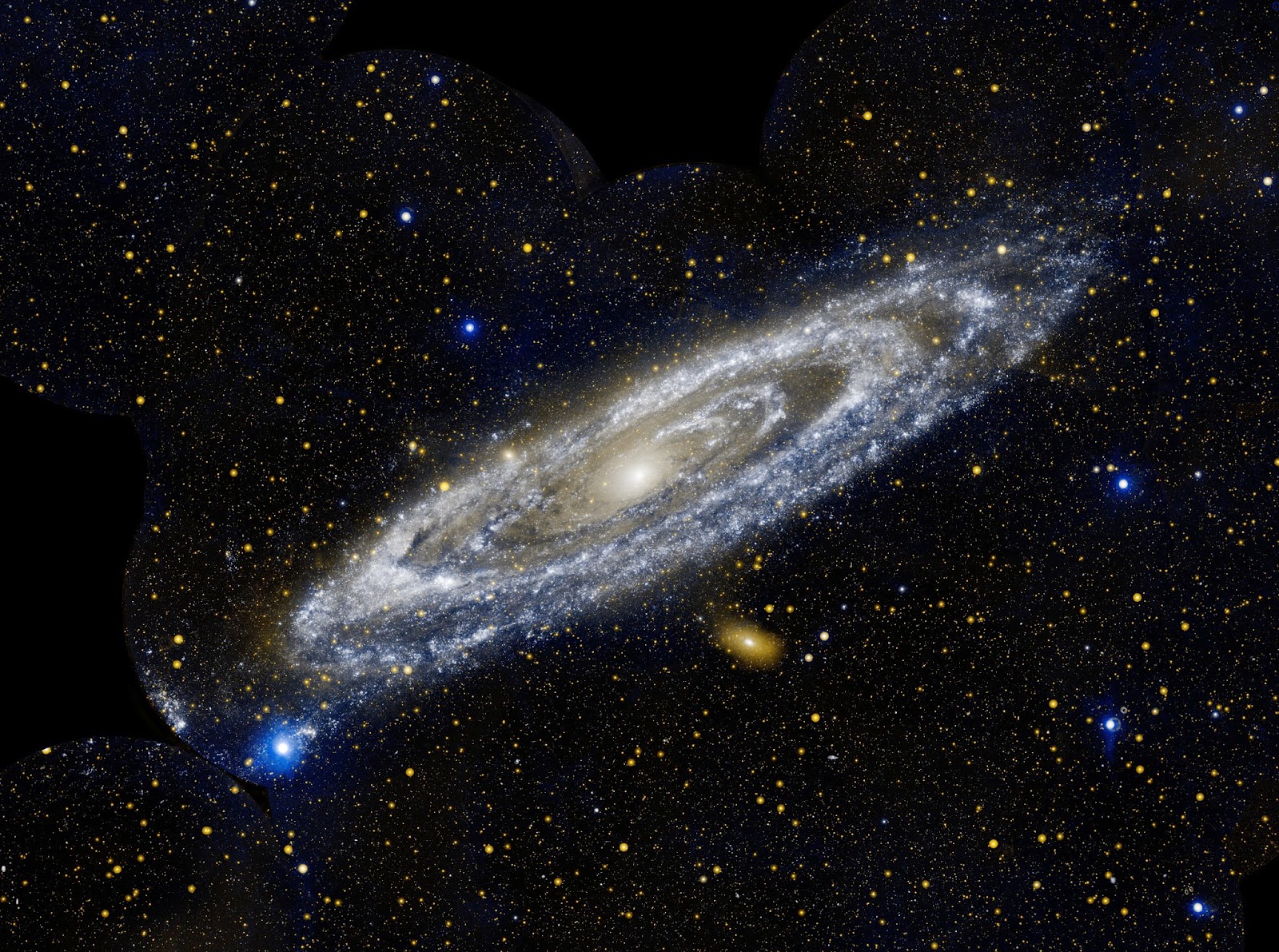 |
| M31 galaxy in the constellation Andromeda contains billions of planets with life according to new data. |
SETI gets a boost recently by news released from astronomers working with the Kepler spacecraft. Minimum, there are tens of billions of planets in our galaxy that are likely to contain life. Moreover, the entire Universe is likely to hold a minimum of 100 billion times 10 billion or a thousand billion billion planets with life.
However, the vastness of the space inside the galaxy and Universe is so great, that many civilizations with warp speed capability would still have great challenges in finding us. For example, if their technology allows warp 10, or travel that's 10 time the speed of light, it will still take 100/10 = 10 million years to reach those galaxies that are 100 million light years distant.
Sunday, June 22, 2014
Momentum Rocket
MOMENTUM ROCKET
A new COM Conservation of Momentum rocket design is invented to impart six times the launching power and propelling force.
The rocket could theoretically replace Space1's fleet of rockets with a new method of no-cost propellant, and is expected to achieve relatively the same apogee during missions.
The mechanical rocket uses Newton's and the conservation of energy. Energy is imparted to the system initially upon launch which propels the rocket during the duration of flight.
The design includes a thrust ring and six energy conduit feeds. These feeds are then maximized just before launch and the energy is then released. Altitude is expected to be approximately the same as the existing Space1's fleet.
Friday, June 13, 2014
Space1 Space Station
 |
| Artistic rendition showing a space station mid-parked as a space vessel veers past |
Space1 company has developed a space station to support its fleet of space rockets.
The space station is capable of making supporting maneuvers within the troposphere, Micro, Next, and Near space, and its primary design goals so far are to support the rockets. This will include photographic missions during the rocket's ascending flight to apogee and descent down to recovery, and possibly the station will assist in search and recovery.
The station is slated for a number of tests including altitude, acceleration and velocity, maintaining a stable flight pattern and hovering, testing of the flight computers, various mission plans, search, rescue, and the ability as a platform to test various rocket functions. It can also serve as a space vessel platform for performing tests on the astronauts at various altitudes and during specific missions.
The first space station has limitations and is only capable of semi permanent supportive positions in space, and must return to the Earth periodically for refueling. The next limitation is about altitude. More tests will be needed to determine this limit. The first station may also have stability issues, in particular when arising to mission position during the outcropping of wind.
There may also be specific downrange limitations to the electronic downlink and uplink. Both telemetry radio links have limited ranges that need to be determined.
Tuesday, June 10, 2014
Big Brain Evolution into Space1

The evolution of the Big Brain has led to a new space program for humans. This is not too surprising, considering that for years, the Big Brain has set its own pace for exploring space.
Some regions of space initiated with exploration programs by the Big Brain include quantum space, nano space, inner space, micro space, next space, near space, solar system space, ultra space and exo space.
According the bounds of the Big Brain space programs, humans have launched into and traversed from the level of micro space, to next space and near space. With the creation of Space1, a new level of human space is in the works. It's true that nearly all programs and all work now conducted by the Big Brain has a focus on Space Tourism and the Space1 company.
Space1 Magazine Issue #2
 SPACE1 MAGAZINE ISSUE 2
Space1 Magazine issue #2 is almost completed, ahead of schedule, and will introduce many new concepts for rocket space science. The magazine is jam packed with top secrets about conducting a tourist rocket space program.
Stories include various rocket design details and the introduction of the new space station and its functions. The story of Space1 is included along with details of how you can become a member of the most exclusive club in the world and go into space aboard our rocket. It is hoped that pricing for seating will be hundreds of times more affordable than NASA and within the budgetary range of most individuals.
Monday, June 9, 2014
Space1 Rockets
SPACE1 ROCKETS
SPACE1 has now developed fourteen rockets.
Space1 is a new space company intent on taking humans safely into space for space tourism on board a space rocket.
Space1 Updated Rocket List
From January to June 2014, Space1 has completed fourteen space rockets.
01) Intl Enterprise
02) DIA
03) Zeus
04) Argus
05) Zeus-Argus
06) M1 Heavy Lift
07) M1 Hybrid
08) M2
09) B1 First Generation
10) B1 Blaster
11) B1 Master Blaster
12) Singularity 1
13) Singularity 2
14) Singularity 3
Subscribe to:
Posts (Atom)