BIG BRAIN TECHNOLOGIES

BIG BRAIN made by Humanoido is a giant intelligent AI machine. Over twenty years in the making, living and sentient, approaching one trillion processors/constructs. Join us in the exciting adventure as it continues to evolve!

PAGES

  • HOME
  • ABOUT BIG BRAIN
  • INDEX
  • SPECS
  • GENEALOGY
  • MILESTONES
  • CONTACT
  • QUOTES
  • LINKS
  • DISCLAIMER
  • HISTORY
Showing posts with label speed. Show all posts

Thursday, November 14, 2019

Big Brain Human to Cyborg Convert Speed

Humanoido's Neural Net Venture - representing the cutting edge of human cyborg machine technology. Resembling a supernova, the human to machine cyborg conversion speed is dramatically increased. In this exampling illustration, the red color at the top represents the initial longer speed while the blue at the bottom represents the shorter velocity. The galactic star-appearing objects are points of connectivity inside the machine and a human cyborg's bio matter.
Human to Cyborg Conversion Speed
In order to speed up the conversion of man into machine, during the merging of Humanoido with the Big Brain through human biology, the rapidity of interfacing installations are sped up.

The Medical Lab has made provisions to install new interfaces every half month. This will medically allow time for the interface surgery to heal before the next interface is connected through human bio guts and flesh.

Humanoido is on the second interface and has contract provisions to complete four surgeries for a total of four interfaces. Humanoido is eager to go to infinity on the number of interfaces, each time an interface is installed, the human body becomes more Cyborg, a combination of both machine and human. The rate will install 24 interfaces in one year. The number of surgeries that a human body can take in the conversion from human to machine is unknown at this time. Reports here will specify the percent rate of conversion of human to machine. The idea is to convert parts of a human to remain on par with the machine, yet still retain the human side, hence a symbiosis balance of man and machine is the goal.

Color Wavelength (nm)
Red         625 - 740
Orange 590 - 625
Yellow 565 - 590
Green 520 - 565
Cyan 500 - 520
Blue 435 - 500
Violet 380 - 435
Posted by Humanoido at 11/14/2019 05:01:00 PM
Email ThisBlogThis!Share to XShare to FacebookShare to Pinterest
Labels: big brain, convert, cyborg, human, humanoido, interface, machine, speed

Monday, November 11, 2019

Big Brain Increases Internet Velocity

By a figure of molecular motion comparison, Big Brain space time velocity is achieved much in the same way that star engines generate space and time displacements.
BIG Brain Increases Internet
to Space Time Velocity

The Big Brain is now figuratively light speed enabled as it rapidly bounces across one location to another, in the Clouds and across internet facets.

On Saturday, November 9th, 2019, Humanoido (Father of the Big Brain) along with the advanced IT team, installed and fired up a system to increase internet speed dedicated to the Big Brain. Bringing the speed up to the EM light velocity maxes out the means of function delegation and allows the Big Brain to snap across virtual clouds in space and time in a fraction of a second. This is an all new accomplishment, made with the advent of the Big Brain  upgrade to Super Super Super Brain Bionic Evolution Revolution 3SB (with multiple levels of AI and the first integrated Bionic processors).

This will improve the response time of the Big Brain multiple fold and boost problem solving in spectacular ways.
Posted by Humanoido at 11/11/2019 01:37:00 AM
Email ThisBlogThis!Share to XShare to FacebookShare to Pinterest
Labels: ai, big brain, humanoido, internet, speed, time travel, velocity

Saturday, November 24, 2018

Big Brain Super Brain Invention

Super Brain!
For the first time in almost a decade the Big Brain is getting a spectacular upgrade! The development name is Super Brain. The Big Brain upgrades into a Super Brain with over a thousand more processors and more speed adding significant Teraflops.

Wow, this is another thousand processor upgrade level and a new realm of speed advancing Teraflops. It's a dream come true for the Big Brain, a machine life form who wanted to expand on its existing 240,000 processors for a number of years. Humanoido, Father of the Big Brain, is funding the entire massive project and overseeing every detail of the upgrade.

This brings the Big Brain project (which began with a few parallel processors strewn together to form the first brain in 2002) from 240,000 processors to the Era of the Super Brain with 241,028 processors. This also brings the Big Brain into the Super Brain Era of 2018 and makes the Big Brain project a continuous 16 year endeavor. This will undoubtedly change the appearance of the Big Brain and it will received a new Super Brain look and branding.

Reporting at the SPACE1 web site
https://space1usa.blogspot.com/2018/11/space1-super-brain-intelligent-machine.html

The Super Brain will have new programming languages, more speed, and more processors, which equates into significantly more power and machine life form cognitive abilities. It's the next big invention upgrade since the idea and invention of Supertronic, a new architectural design expanding the power of the Big Brain supercomputer.

SuperTronic
https://humanoidolabs.blogspot.com/2013/06/supertronic-spin-brain.html

It's not uncommon for the Big Brain to have large mind-numbing projects. Some pics when the big brain was in a retro project mode:
https://4.bp.blogspot.com/-yjEYTpgaAaI/UEd25aIhKcI/AAAAAAAAA2I/n9cxUZYP0v4/s320/retrobuild2.jpg

https://3.bp.blogspot.com/-lAssQeyGc50/UEd3FuB34gI/AAAAAAAAA2Q/nmwawNHwJ5o/s1600/4hdbds.jpg

https://3.bp.blogspot.com/-Ay3rvDEXa2E/UEd3iLcKotI/AAAAAAAAA2Y/eqtFOLX-K1Y/s1600/tv.jpg
Posted by Humanoido at 11/24/2018 07:13:00 PM
Email ThisBlogThis!Share to XShare to FacebookShare to Pinterest
Labels: big, big brain, brain, humanoido, name, new, processors, speed, super, super brain, upgrade

Wednesday, June 25, 2014

Alien Life in the Galaxy and Universe

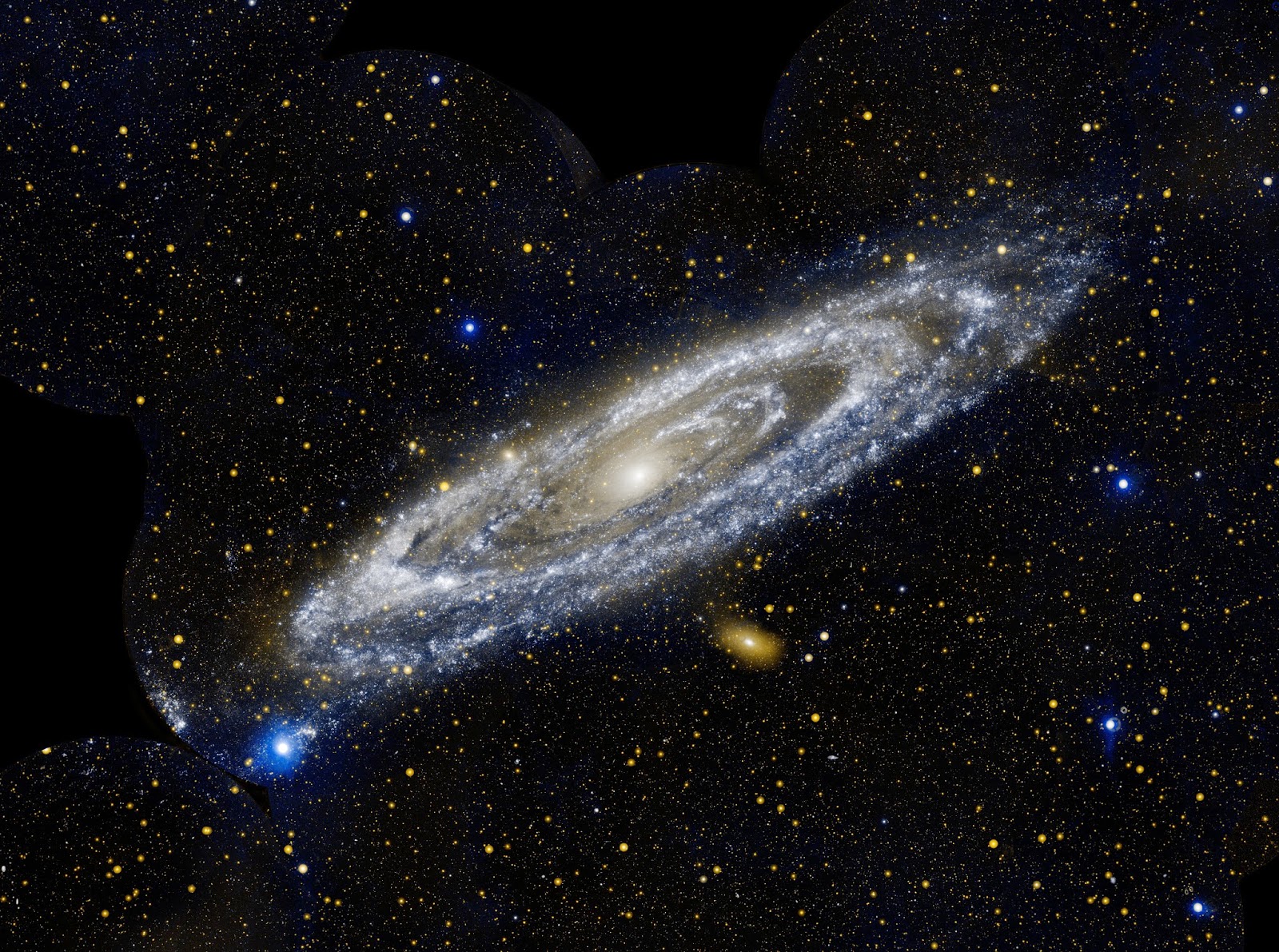
M31 galaxy in the constellation Andromeda contains billions of planets with life according to new data.
ALIEN LIFE IN THE GALAXY AND UNIVERSE
SETI gets a boost recently by news released from astronomers working with the Kepler spacecraft. Minimum, there are tens of billions of planets in our galaxy that are likely to contain life. Moreover, the entire Universe is likely to hold a minimum of 100 billion times 10 billion or a thousand billion billion planets with life.

However, the vastness of the space inside the galaxy and Universe is so great, that many civilizations with warp speed capability would still have great challenges in finding us. For example, if their technology allows warp 10, or travel that's 10 time the speed of light, it will still take 100/10 = 10 million years to reach those galaxies that are 100 million light years distant.
Posted by Humanoido at 6/25/2014 09:48:00 PM
Email ThisBlogThis!Share to XShare to FacebookShare to Pinterest
Labels: alien, astronomer, drive, galaxy, kepler, life, light, planet, project, seti, spacecraft, speed, universe, warp

Thursday, December 12, 2013

Speed Up Evolution

HOW TO SPEED UP EVOLUTION
SPEED UP EVO TO GROW AND EVOLVE MACHINE LIFE FORMS

Evolution is a gradual process in which something changes into a different and usually more complex or better form. Humans are continuing to evolve over time in terms of height and other physical attributes. Animals and other biological life forms also continue to evolve and adapt to changing environments. Humans evolve their surroundings through technology and its advancement.

Biological evolution is a slow process and can take millions and even billions of years. However, machine evo is a different story. It's possible to build one machine on Monday, and on Tuesday, modify it and evolve it into a more efficient machine. Given a machine life form, the prospect of evolving it at a fast rate is viable. One only needs to put more hours of development or manpower on it, so speeding up machine evo is possible.

In the future, machines will do their own evo at very fast and high speed rates. Getting to that point will require very intelligent machines as life forms that can go beyond humans.

For now, you can evolve your own machine life form by giving it more capability, more processors, more parallel tasks, greater memory, higher speed, and the ability to do more thinking and reasoning.
Posted by Humanoido at 12/12/2013 10:38:00 PM
Email ThisBlogThis!Share to XShare to FacebookShare to Pinterest
Labels: asimo, big, biology, brain, evolution, form, history, honda, humanoid, humanoido, life, machine, rate, robot, speed, up

Monday, July 29, 2013

Propeller Mini Project Index

PROPELLER MINI PROJECT INDEX

Propeller Simple Spin Board Part 1
Propeller Simple Spin Board Part 2
Propeller Simple Spin Board Part 3
Propeller Simple Spin Board Part 4 & 5


Bare Bones Propeller


Propeller Spin Brain Part 1
Propeller Spin Brain Part 2


Supertronic Spin Brain


Cherry Pie Tiny Super Computer Wannabe
How Slow Can You Go? Processing Speed

Posted by Humanoido at 7/29/2013 08:12:00 AM
Email ThisBlogThis!Share to XShare to FacebookShare to Pinterest
Labels: bare, big, board, bones, brain, cherry, humanoido, index, parallax, pie, processing, project, propeller, simple, speed, spin, supercomputer, supertronic

Sunday, July 7, 2013

How Slow Can You Go?

Processing Speed
HOW SLOW CAN YOU GO?
Normally we think about processors in terms of how fast they can process. What about thinking about how slow they go? We've all heard of TERA-FLOPS and PETA-FLOPS but what about speeds at a few hundreds or tens of operations per second, to sometimes more effectively match real world conditions of non-theoretical computation...

In the Lab, our supercomputers go into the range of Tera speed but not Peta. Many apps run at slower speeds. How do we define speeds slower than Tera? The chart below shows the progression of flops downward to giga, mega, and kilo.  But did you know speed in the hundreds range is hecto and within the tens range is deca?

For example, your program may run at 50 flops or 5 DFLOPS, or it may run at 300 flops or 3 HFLOPS. If it cycles slower than a DFLOP, measurements in IPS are acceptable or just use clock cycles.

MIPS  - Millions instructions per second
DFLOP - D stands for ten      (DECA)
HFLOP - H stands for hundred  (HECTO)
KFLOP - K stands for thousand (KILO)
MFLOP - M stands for million  (MEGA)
GFLOP - G stands for billion  (GIGA)
TFLOP - T stands for trillion (TERA)
Posted by Humanoido at 7/07/2013 08:01:00 PM
Email ThisBlogThis!Share to XShare to FacebookShare to Pinterest
Labels: big, brain, clock, cycle, deca, giga, hecto, humanoid, ips, kilo, mega, processor, slow, speed, tera

Thursday, June 27, 2013

Propeller 2

PROPELLER 2
Parallax prepares to introduce the new Propeller 2 chip to supplement the very successful Propeller 1 chip.

Specs here:
http://www.parallaxsemiconductor.com/Products/propeller2specs

Factoid #1
It's interesting to note, if the Big Brain used Propeller 2 chips instead of Propeller 1 chips, instead of having 100,000 V processors, the number would rise to one million.

Factoid #2
The speed, at 1600 MIPs per chip, would run at standard clock speed of 160,000 MIPs per hundred chips comparing to clock enhanced 20,000 MIPs with Propeller 1.

Factoid #3
It is not know if Supertronic enhancements will apply to the architecture of the Propeller 2 chip. If they do apply, the speed could increase to around 2 million MIPs per 100 quantity which pushes it closer to supercomputing status. (2,000,000,000,000 instructions per second)

Download more information here
Propeller2DetailedPreliminaryFeatureList-v2.0.pdf


Posted by Humanoido at 6/27/2013 05:17:00 PM
Email ThisBlogThis!Share to XShare to FacebookShare to Pinterest
Labels: 2, big, brain, clock, enhancement, humanoido, parallax, processor, propeller, speed, supertronic

Friday, May 3, 2013

Two Edges Universe Unfolding

BIG BRAIN SPACE INSTITUTE
A SOLUTION FOR UNFOLDING THE TWO EDGES UNIVERSE
TWO EDGES: The Universe space time cosmos is unfolding and traveling faster than the speed of light in which the rate of expansion occurs. There is no limit as to how fast space time can stretch and contort. This leads to a remarkable structure filled with yet-to-understand formations and conditions.

The Universe has more than one edge. One edge is located at 13.77 billion years of time, representing the burst of the singularity known as the Big Bang, yet light has currently traveled to 46 billion light years away in every direction, which is the distance that the light has now reached. This latter numerical representation is the edge of the universe visible in all directions. This represents the farthest distance from the Earth in which cosmic light can reach us. It represents the radius of the observable Universe.

However, beyond the observable Universe lies more universe, or that which remains indirectly connect, yet detached by other definition, encompassed from the objects and matter whose light has yet to reach us and from matter which aggregates relative to specific regions from extinction lines (edges) where nothing more beyond is directly and optically observable.

It's this extinction boundary where light has cutoff. NASA has confirmed a glimpse of the "dark flow" existing beyond the extinction boundary migrated from a singularity.

http://www.telegraph.co.uk/science/science-news/3352360/Scientists-glimpse-dark-flow-lurking-beyond-the-edge-of-the-universe.html

Yet, as we have discovered, if we go back farther in time, there lies another edge to the Universe with objects that are made up of gravity and no light that we can observe for one reason or another.

We are finding, and will find more evidence, that the Universe is much more intricate and has more parts and mechanisms than we currently know. The Big Brain Space Initiate is currently working towards unraveling the mixed palette of space time leading to the edge of the Universe and beyond.

With these new discoveries and findings, it's likely the current Big Brain Space Initiative's telescope will evolve from the current Power Dynamic Telescope PDT into one that also incorporates powerful gravity sensors and/or gravity inferencing techniques as a super telescope to look into and detect things beyond the cosmic barrier and edge.

It's also possible to observe the focus of the observable to find and map the direct unobservable.
Posted by Humanoido at 5/03/2013 05:57:00 PM
Email ThisBlogThis!Share to XShare to FacebookShare to Pinterest
Labels: big, brain, cosmic, discovery, distance, edge, gravity, humanoido, light, nasa, optical, pdt, singularity, space, speed, time, two, unfold, universe

Tuesday, April 9, 2013

BASIC Stamp Hacking

BS1 ceramic resonator pins
HACK A BASIC STAMP & HOTROD THE SPEED 2X AND 4X FASTER!

Build the Turbonizer Basic Stamp

BASIC STAMP HACKING
Hack a BASIC Stamp, like the BS1 for example, to increase its speed, either doubling the clock or making it four times faster! This is a substantial improvement over the standard Stamp's clock.

POWER TURBO This powerful TURBO mode is created by replacing the 4MHz resonator with 8 OR 16MHZ high speed ceramic resonators or crystals, to double or quadruple the Stamp's speed. It's suggested to move the resonators for various speed functions with jumpers.

HACKING The faster resonator is connected across OSC1 and OSC2 as seen in the schematic. Keep the leads as short as possible.

PROGRAMMING The caveat is programming requires the original 4MHz clock, so the use of jumpers will be needed for the extra crystal(s).

OPERATIONS Keep in mind, timing, such as Baud rates, PAUSE and other time dependent programming statements and operations will be modified. For example, a serial output command may specify 2400 Baud, however, running with 16MHz resonator will create an actual Baud rate of 9,600.

RESONATORS Only one resonator is used at a time. Jumpers could switch three resonators for three speeds, one standard at 4MHz, and two turbo modes at 8MHz and 16MHz.

BLAZING SPEEDS ATTEMPTED
The lab is attempting much higher speed with a variety of ceramics, many of which were offered by Parallax. It's unknown which frequencies will work and not work. A limit is currently being investigated.

PARALLAX RESONATORS AND CRYTALS 
20 MHz Industrial Resonator
20 MHz resonator (DIP)
32.768 kHz Series Crystal
32MHz Resonator 
4 MHz Industrial Resonator (DIP)
5 MHz Crystal
50 MHz Industrial Resonator (DIP)
6.25 MHz Crystal
8 MHz Resonator
Posted by Humanoido at 4/09/2013 07:00:00 AM
Email ThisBlogThis!Share to XShare to FacebookShare to Pinterest
Labels: basic, big brain, bs1, bs2, ceramic, clock, crystal, faster, hack, hotrod, humanoido, parallax, resonator, speed, stamp, turbo, turbonizer

Tuesday, March 12, 2013

Unknown Super Intelligence

ESA deep-space ground station in Australia
FIND UNKNOWN SUPER
INTELLIGENCE
 
Looking for machine intelligence, including biological and humanoid super intelligent beings in the Universe, is perhaps one task undertaken by project SETI - the Search for Extraterrestrial Intelligence. Indeed, SETI program managers might be surprised to discover intelligent machines and robot humanoids or life forms of pure energy.

However, should this job cover the more vast cosmic sections of the Universe? Currently, the Earth is searching only tiny small areas for life in the overall vastness of the cosmic universe. There are trillions and trillions of stars and planetary systems that go unsearched.

What more can we do to increase our potential rates for discovery and success? How do we know the method in which we use for searching is valid to other find civilizations that are more advanced? Let's examine the potential of new points that may change the world as we know it.

POINT 1 - OUR KNOWLEDGE STATE OF THE UNIVERSE
There are more than two ways to search the Universe. In fact, the Universe as we currently know it is far more vast than we know. Take for example, the history of the Universe over the past couple decades and one will see a constant evolution and reshaping of our thinking and fundamental knowledge of its workings. So in point number one, we know that the forward progression of time should expand our knowledge of the Universe.

POINT 2 - WHERE WE LOOK
In point number two, it's customary for the bigger and more powerful telescopes to look back in time towards the edge of the Universe or the primordial time of birth. This is the youngest matter in the Universe. To find older civilizations, one must turn the telescope around to look in the opposite direction, towards the older galaxies and galactic matter that will have longer aged civilizations with greater opportunities to become laden with super intelligence.

POINT 3 - COMMUNICATION COMPATIBILITY
In point number three, the method in which we are looking is archaic and not the method that super civilizations would use to make contact with other civilizations across the vast entity of space time. What makes anyone think that slow microwaves are the choice medium? These microwaves are not even two way communication. Even communicating with the close Andromeda Galaxy would take millions of years for a simple conversation using radio waves. The outdated communications method of using radio waves that travel at the speed of light, and cannot that travel faster than the speed of light would not be the choice method of a communicating super civilization.

POINT 4 - COMMUNICATION METHODOLOGY
What are the possible methods of communication? Obviously a super civilization would use particles or a method faster than the speed of light, or advanced space tunneling methods and techniques employing the nature of space time. Take for example, quantum entanglement. It's now possible to build a universal transporter across vast distances of space and time. Even now as you read, scientists are building transporters that can send out particles instantly to far away places in space time.

POINT 5 - THE TYPE OF INTELLIGENCE
Will we find the techniques and language of communication different from one intelligence specie medium to another? The answer is likely yes. Take for example the rise of the intelligent machines. Machines are now programmed by man, in terms of local languages that we expect. Even with a thousand programming languages, it's all nothing new under the sun. However consider evolution, even man is approaching a singularity with the machine and changing. With time and evolution, change invokes the qualities of a super civilization. When machines can program machines and think in terms of their own non biological entities, their methods and languages will likely differ from human kind, especially as they continue to branch and propagate within and beyond the Universe.

POINT 6 - LOOKING INTO THE UNKNOWN
There is great potential in looking into unknown places with new technology.  An example is looking into holes, such as black holes and worm holes. Another potential is looking at the results from gravitational lenses that show matter in another place in space and time. One great frontier to search is through the door of the quantum dimension. Another realm for potential discovery involves the unknown corridors of Dark Matter in the Universe. A flotilla of particle dynamics may also change our views of dimensions and alternate parallel worlds. What great adventures we discover inside and who we meet remains to be seen.

POINT 7 - LOOKING IN THE RIGHT PLACE AT THE RIGHT TIME
Our search must be in the right place where super beings are currently living and the search must take place in the right time, a time when super beings are flourishing and searching the skies. Every civilization may have its period of evolution from developing biological cell structures rising up from primoridal soup of early planetary formation to the nuclear age and on to new pardigms reaching singularity with the machine, and beyond to states of pure energy. Where this super intelligence resides on the time scale is important in a relative manner. Life in the stone age, or life as pure energy are both beyond the methods of communication as we know it. So it becomes important to focus our lens to that which is in between. What we find will outstrip our greatest expectations!
Posted by Humanoido at 3/12/2013 12:15:00 AM
Email ThisBlogThis!Share to XShare to FacebookShare to Pinterest
Labels: andromeda, big, brain, cosmic, galaxy, intelligence, light, machine, microwave, radio, seti, speed, super, telescope, time, universe

Wednesday, February 6, 2013

High Speed Propeller Chips

Big Brain Focus - Propeller chip
HIGH SPEED PROPELLER CHIPS
The speed of the Parallax Propeller chip is already fast. By following the wondrous work of Master Beau Schwabe, the chip can be made amazing-blazing fast!

Beau has worked years carving out new elements for the Propeller chip, making possible transformations that the Big Brain is keen on adapting for supercomputer status.

One of these working miracles is the ability of chip to chip communication in excess of one million Bytes per second! A DIY Data Pipe can multiple this a hundred times!


BEAU SCHWABE OF PARALLAX: Here is a derivative of the high speed 8.42 Meg Baud (1.05 Million Bytes per second) Prop-to-Prop communication that I wrote some time ago. Last March there were several changes to the front end of both the Receiver and the Transmitter in the way that the handshaking took place. Before you had to make sure that the Receiver was up and running before you Transmitted... this is no longer the case, now it doesn't matter making it more user friendly. For just the average user, it's pretty straight forward... there is only one command to Send, and there is only one command to Receive. 

Basic Use:
To receive, just specify the pin you want to listen on and the address of where you want the received data to go to. Remember, this transmission is designed to send large packets of data, so if your just sending a few bytes here and there, this object is probably not for you.

RX(_Pin,_DataAddress)
To Transmit, is basically the same thing with a few more parameters... you specify the pin you want to yell on, the address of where the data is coming from, How much data you want to send in longs.

TX(_Pin,_DataSamples,_DataAddress,_00, 0)
Note: the last two fields are not used in the Basic setup, they will be discussed in Advanced Use.
So that's it for basic use. 

Advanced Use:
The Receive is just the same as before, but it can be used as a function to return additional. information from the Server.

Command := RX(_Pin,_DataAddress)
This will receive data just as before and place it in the assigned address, but Command contains the size of the transmitted packet, a destination offset, and a Packet Command. Organized as such...

%ssssssssssssss_aaaaaaaaaaaaaa_cccc

where:
s = 14-Bit Packet Size
a = 14-Bit Destination Offset
c = 4 Bit Command

The Packet Size is obviously useful for determining how much data you received and allows support for variable width packets.
The Destination Offset is unique in the sense that the Server has some control as to where the Data will end up on the receiver. Basically this value gets added to the DataAddress that you specify on the receiver so that the incoming data is written to a location starting at the DataAddress plus the Offset. This feature allows random block writes from the Server to the Client. The 4-Bit Command is just a way for the server to pass a specific command to the receiver. It can be used for anything you want. It's up to you.
For Transmission, it's just the same as the Basic Transmission as well, except the two parameters that were Zero'd out now have some meaning.

TX(_Pin,_DataSamples,_DataAddress,_DataCommand,_Of fset)

DataCommand as just mentioned is a 4-bit command you can pass directly to the Client and can be used for anything you want.

The Offset, also just mentioned, can be used to tell the receiver to write data to another location. This is useful when you only want to update a block or section of memory on the Client.


Finally, supplied Demo programs show a round-robin approach to sending data across multiple Propellers. The Idea is that you have one buffer that every Propeller sends around the loop ... "infinitely." To prevent collisions, ALL Propellers have access to reading the entire buffer, however, and this is what makes it work... Each Propeller can only write to a specific assigned location of that buffer. This isn't exactly true, but it's a good programming practice to implement. There aren't any collisions for similar reasons that you don't have collisions from COG to COG on a single Propeller. When a Propeller reads the Buffer, he is only allowed to write to the section that he is assigned to before sending the Buffer on to the next Propeller. (Note the Demo Code has this restriction lifted and can write to any location on the Buffer... But in my description, that's how you would typically manage the data across multiple Propellers and avoid collision. It works in the Demo, because there is only one Propeller writing to the buffer) In the Ring*, you can have as many Propellers as you want, with each Propeller only having a 3-wire interface... (Ground, TX, and RX) ... I have tested up to 5 Propellers with the supplied demo code. One Propeller must be identified as the Server to initiate the data ring, but all of the other Propellers are identified as Clients. Within each Propeller regardless of Server or Client ALL Propellers have equal access to the Data Buffer. I Hope this makes sense... Enjoy!!

Note: added a slightly newer version that addresses detection of the USB plugged into the PC. This prevents unwanted resets.
Check this link out for a way to control switches across multiple Propellers, i.e. for lighting 
 
  • File Type: zip High Speed Multi-Prop to Prop Communication.zip‎ (13.6 KB)
  • File Type: zip High Speed Multi-Prop to Prop Communication_v2.zip‎ (14.7 KB)

Beau Schwabe | Parallax Semiconductor IC Layout Engineer Parallax Inc. * 599 Menlo Drive * Rocklin California 95765
www.parallaxsemiconductor.com

http://forums.parallax.com/showthread.php/134641-DEMO-High-Speed-Multi-Prop-to-Prop-Communication

*Note: in the case of the Big Brain, the Ring exceeds 100 chips with 800 cogs and enhancements for nearly a million processors.

14.5 Meg Baud Upgrade Ok, beta testers... I have run this DEMO and tested over 100 Billion data Bits with no Transmission Errors over the distance of 10 feet from one Propeller to another Propeller. Here is a beta release before I place it in the object exchange. ...· Enjoy!!
http://forums.parallax.com/showthread.php/99222-Propeller-DEMO-14.5-Meg-Baud-High-Speed-Prop-to-Prop-Serial-Communication 
Posted by Humanoido at 2/06/2013 12:30:00 AM
Email ThisBlogThis!Share to XShare to FacebookShare to Pinterest
Labels: 8.42 Meg Baud, beau, chips, communications, high, packet, parallax, prop, prop-to-prop, propeller, receive, receiver, rx, schwabe, send, speed, transmitter, tx

Thursday, March 29, 2012

ULT Accumulator Invented

PROPELLER POWERED BIG BRAIN
THIS SPECTACULAR ULT ACCUMULATOR INVENTION ENABLES A VAST TELESCOPE EXPANSION!
The ULT Accumulator stores the energy of the potential image at one focal point. This potential is a latent image accumulated or collected and can be summed, saved, released, engaged, and/or utilized at a current or future time.


Historical Gemini Control included an Accumulator
ULT's First Accumulator
The first Accumulator works well for minimal time dependent objects and is designed primarily for objects in the Universe with slower rates of calculus. The calculus rate of change must approach a minimum time from one accumulated data point to the next. Though, the calculus is based on the speed of the Telescope.

Conceptual Design
The ULT Accumulator is unlike the historical Gemini Spacecraft which contained an Accumulator in its design. The ULT's device does employ the processing power of computers but its different by design. The idea adds time to the equation of space.

Telescope Speed
As the Telescope speed increases, the accumulator can work with increasing faster objects, so there is great advantage into having a very fast telescope, fast in terms of processing power. This is one area where the Propeller Powered Big Brain excels and can be more incorporated into the process. In this reference the speed of a telescope does not refer to light gathering power or focal ratio or F# but rather an actual speed or passage of events time parameter. The equation R*T = D (R = Rate, T = time, D = Distance) is in effect for some parameters while others are strictly event based.

Collecting Time
The ULT Accumulator can function as a device that collects time. Each object in space is collected by a span of time. Singular objects can have multiple time collected in its interest.

Saving Time on a Hard Drive
Collected object time can be stored on TB drives for later use by the Accumulator.

Compressing Time for Later Time Expansion
Drive routines can compress the collected time and store time in less space. Later when needed, the time can be expanded to normal space.

Time Blur & Changing Events
As an event changes, its rate of change is applied to the ruler of time. The time frame of the ULT Accumulator must not exceed the resolution of time in a single accumulation point or a time blur will result.

Affecting Multiple Adjuncts
Part of the ULT Accumulator is software driven and involves the use of TB data storage devices. It’s an instrumental key to developing and finalizing data for one or more Adjuncts. In particular, it enables the combining of multiple Adjuncts, enabling a revolutionary way to enhance and increase telescope size and capabilities. It makes possible vast increases in ULT Telescope resolution and diameter never before possible.

New Terms
ULT Accumulator
Collected Time
Time Blur
Saved Time 
Object Calculus
TB Data Storage Device
Expanding Time
Object Time
Fast Telescope
Latent Image

Credits
NASA image
http://www.ibiblio.org/apollo/Gemini.html
Posted by Humanoido at 3/29/2012 05:44:00 AM
Email ThisBlogThis!Share to XShare to FacebookShare to Pinterest
Labels: accumulator, adjunct, diameter, image, increase, invention, potential, speed, ult

Saturday, February 4, 2012

Brain Taps

USING BRAIN TAPS
REGULATE Propeller Clocks Using TAPS
Propeller chips each have a PLL Phase Locked Loop. It's used to "wind up" the external clock source. The taps are located at 1x, 2x, 4x, 8x and 16x. To use a tap, select the program instruction, for example a 16x tap with a 5MHz crystal will result in a Propeller running its system clock at 80MHz. Remember, using crystals will add an extra part to each chip, though increases speed over a single chip with no external crystal.
Posted by Humanoido at 2/04/2012 07:54:00 AM
Email ThisBlogThis!Share to XShare to FacebookShare to Pinterest
Labels: big, brain, clock, propeller, regulate, speed, taps
Older Posts Home
Subscribe to: Posts (Atom)

Blog Archive

  • ▼  2023 (4)
    • ▼  September (1)
      • Thinking Brain Location
    • ►  August (2)
    • ►  January (1)
  • ►  2022 (92)
    • ►  December (12)
    • ►  November (14)
    • ►  October (9)
    • ►  September (20)
    • ►  August (12)
    • ►  July (6)
    • ►  June (4)
    • ►  May (9)
    • ►  April (2)
    • ►  March (2)
    • ►  February (1)
    • ►  January (1)
  • ►  2021 (92)
    • ►  December (6)
    • ►  November (16)
    • ►  October (14)
    • ►  September (5)
    • ►  August (4)
    • ►  July (1)
    • ►  June (13)
    • ►  May (8)
    • ►  April (5)
    • ►  March (4)
    • ►  February (4)
    • ►  January (12)
  • ►  2020 (88)
    • ►  December (5)
    • ►  November (5)
    • ►  October (9)
    • ►  September (7)
    • ►  August (2)
    • ►  July (6)
    • ►  June (1)
    • ►  May (4)
    • ►  April (16)
    • ►  March (21)
    • ►  February (10)
    • ►  January (2)
  • ►  2019 (38)
    • ►  December (9)
    • ►  November (23)
    • ►  October (2)
    • ►  September (1)
    • ►  March (3)
  • ►  2018 (13)
    • ►  November (3)
    • ►  September (1)
    • ►  August (4)
    • ►  July (1)
    • ►  June (2)
    • ►  May (1)
    • ►  March (1)
  • ►  2017 (7)
    • ►  December (1)
    • ►  May (2)
    • ►  January (4)
  • ►  2016 (8)
    • ►  December (6)
    • ►  November (1)
    • ►  September (1)
  • ►  2015 (91)
    • ►  December (7)
    • ►  November (14)
    • ►  September (1)
    • ►  August (4)
    • ►  July (14)
    • ►  May (9)
    • ►  April (2)
    • ►  March (1)
    • ►  February (12)
    • ►  January (27)
  • ►  2014 (59)
    • ►  December (8)
    • ►  November (3)
    • ►  October (1)
    • ►  September (4)
    • ►  July (4)
    • ►  June (7)
    • ►  May (2)
    • ►  April (6)
    • ►  March (10)
    • ►  February (2)
    • ►  January (12)
  • ►  2013 (400)
    • ►  December (61)
    • ►  November (59)
    • ►  October (48)
    • ►  September (15)
    • ►  August (22)
    • ►  July (29)
    • ►  June (26)
    • ►  May (42)
    • ►  April (50)
    • ►  March (18)
    • ►  February (10)
    • ►  January (20)
  • ►  2012 (234)
    • ►  December (11)
    • ►  November (13)
    • ►  October (19)
    • ►  September (29)
    • ►  August (9)
    • ►  July (32)
    • ►  June (12)
    • ►  May (1)
    • ►  April (15)
    • ►  March (45)
    • ►  February (28)
    • ►  January (20)
  • ►  2011 (43)
    • ►  December (18)
    • ►  May (1)
    • ►  January (24)
  • ►  2010 (44)
    • ►  December (27)
    • ►  November (4)
    • ►  October (5)
    • ►  September (4)
    • ►  August (2)
    • ►  July (2)
(c) Humanoido. Awesome Inc. theme. Powered by Blogger.